CONUAR integrates the key stages of nuclear fuel element manufacturing in Argentina, from uranium dioxide (UO₂) fuel pellet production and high-precision components to fuel rod assembly and final fuel element integration.
With more than 40 years of experience in the nuclear industry, CONUAR brings together engineering, manufacturing, quality control and traceability capabilities to produce nuclear fuel for different reactor technologies.
Nuclear fuel manufacturing requires strict control over material properties, component dimensions, welding processes and leak-tightness throughout production. The result is a nuclear fuel element designed to operate under the temperature, pressure and neutron flux conditions of its specific reactor.
What Is a Nuclear Fuel Element and How Does It Work?
A nuclear fuel element is an engineered structure containing the nuclear fuel material used to generate thermal energy inside a nuclear reactor.
During reactor operation, controlled nuclear fission releases heat. This thermal energy can then be used to produce steam and ultimately generate electricity.
The fuel element combines the nuclear fuel material with metallic components designed to contain it and maintain the geometry required by the reactor design. Its manufacturing process must therefore ensure demanding levels of dimensional stability, integrity and leak-tightness for safe and reliable operation.
How Is Nuclear Fuel Manufactured?
At CONUAR, the manufacturing process includes several stages that transform raw materials and precision components into a finished nuclear fuel element. These stages include UO₂ fuel pellet production, cladding tube manufacturing, fuel rod assembly and final integration.
1. Uranium Dioxide (UO₂) Fuel Pellet Production
The process begins with uranium dioxide (UO₂) powder, which may contain natural or slightly enriched uranium depending on the fuel technology.
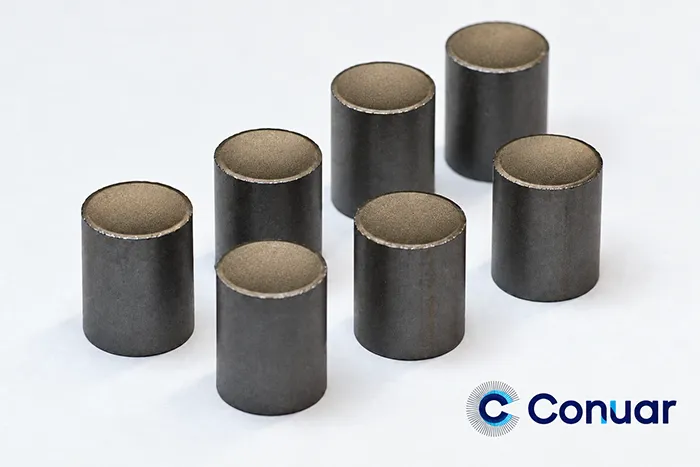
Using automated pressing systems, the powder is compacted into pellets. The pellets are then sintered at high temperatures in controlled-atmosphere furnaces to achieve the required ceramic properties.
Finally, precision grinding brings the fuel pellets to the specified dimensions required for their subsequent incorporation into the fuel rods.
2. Zircaloy-4 Cladding Tube Manufacturing
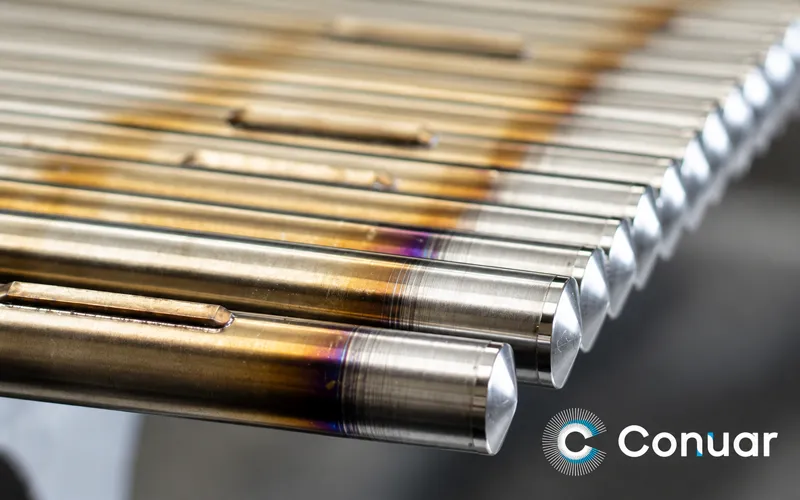
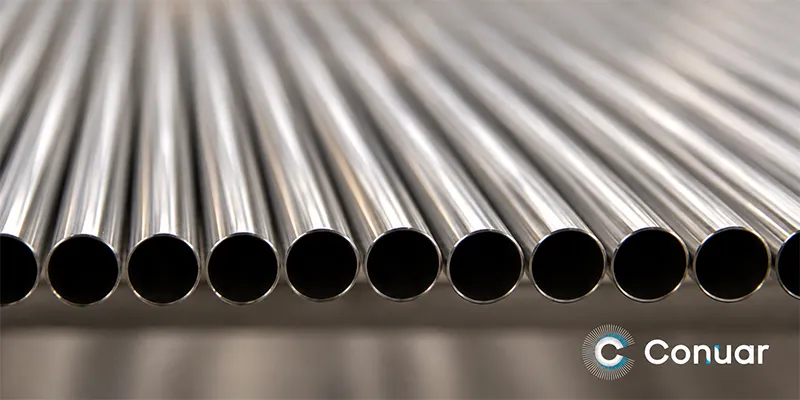
Nuclear fuel cladding tubes are long, thin-walled tubes that contain the UO₂ fuel pellets. For certain reactor technologies, these components are manufactured from Zircaloy-4, a zirconium alloy used in nuclear applications.
CONUAR manufactures these components at its Advanced Alloy Tubes (TAA) facility. Their production requires precise dimensional control, including verification of wall thickness and material integrity.
3. Fuel Rod Assembly and Sealing
Once manufactured, the UO₂ pellets are loaded into the cladding tubes. The tubes are then hermetically sealed using automated welding processes in a helium atmosphere, forming the nuclear fuel rods.
The sealing process must meet strict leak-tightness requirements to maintain fuel rod integrity during reactor operation and contain the fission products generated during service.
4. Nuclear Fuel Element Assembly
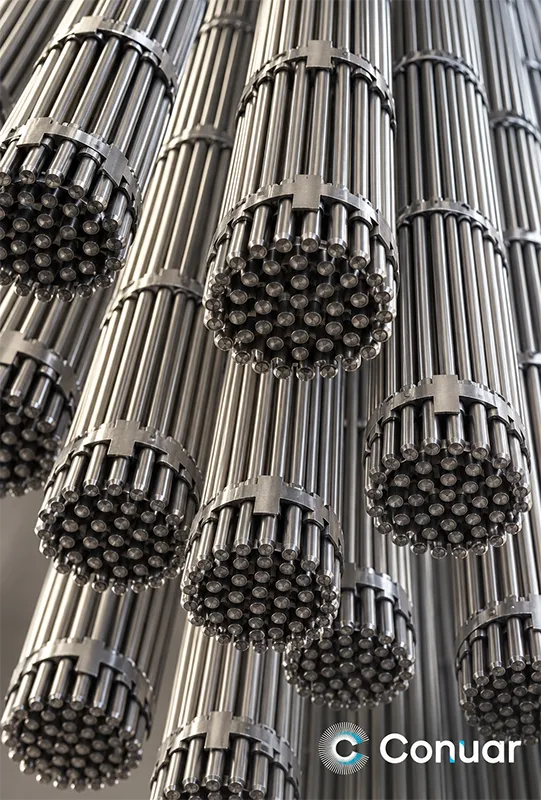
The fuel rods are integrated with structural components, supports and end fittings to form the finished nuclear fuel element.
The final configuration is determined by the specifications of each reactor technology. CONUAR has experience manufacturing nuclear fuel for Argentina’s nuclear power plants, including Atucha I, Atucha II and Embalse.
Nuclear Fuel Requirements for Reactor Operation
During its service life, nuclear fuel is exposed to demanding conditions involving temperature, pressure and radiation. Its manufacturing process must therefore ensure several fundamental characteristics.
- Leak-tightness: fuel rods must maintain their integrity to contain fission products during reactor operation.
- Thermal and dimensional stability: components must withstand operating conditions while maintaining the geometry required by the reactor design.
- Material purity: raw materials must be carefully controlled to limit impurities that could affect neutron behavior or the properties of metallic alloys.
To meet these requirements, CONUAR combines specialized personnel, dedicated equipment, qualified procedures and manufacturing processes performed under controlled conditions.
Engineering and Quality Control in Nuclear Fuel Manufacturing
The quality of a nuclear fuel element is not verified only at the end of production. It is established and controlled throughout the entire nuclear fuel manufacturing process.
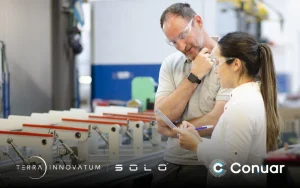
Process Engineering designs, standardizes and optimizes manufacturing methods to ensure safe, efficient and repeatable procedures. Production performs each operation according to approved process routes and technical parameters, while Quality independently verifies compliance before subsequent manufacturing stages are authorized.
This integration of engineering, manufacturing and quality control connects each production operation with the evidence required to demonstrate product conformity.
Nuclear Fuel Inspection and Testing
Throughout manufacturing, CONUAR applies different inspection and testing techniques to verify the fuel material, cladding tubes, welds and final fuel element geometry.
- Passive gamma scanning: verifies the homogeneity and correct distribution of uranium within the fuel rods.
- Ultrasonic inspection: examines Zircaloy-4 cladding tubes to verify wall thickness uniformity and identify potential internal discontinuities.
- Weld radiography: helps identify discontinuities such as porosity, cracks or lack of fusion in welded joints.
- Helium leak testing: verifies the leak-tightness of welds and sealed components.
- Automated laser vision dimensional inspection: verifies that the geometry of the finished fuel element meets specified tolerances.
These inspections are complemented by corrosion testing, metallographic examinations and isotopic analyses performed on representative samples from production batches.
Full Traceability of Nuclear Fuel Elements
Each finished fuel element has a complete manufacturing record that makes it possible to trace the operations performed, production parameters and associated inspection results.
This traceability acts as the product’s “digital fingerprint”, providing a detailed record of how it was manufactured and maintaining relevant information throughout its service life.
The documentation system also supports compliance with the safety, quality and safeguards requirements applicable to nuclear activities.
Nuclear Fuel Manufacturing for Different Reactor Technologies
CONUAR’s industrial capabilities include the manufacturing of nuclear fuel and components for different reactor technologies, including PHWR and PWR systems, MTR research reactors and Small Modular Reactor (SMR) developments such as CAREM.
These capabilities cover processes ranging from UO₂ fuel pellet production to the manufacturing of special alloys, high-precision seamless tubes, fuel rods and final nuclear fuel element assembly.
This industrial integration enables CONUAR to support Argentina’s nuclear sector while also participating in international markets for nuclear components, fuel-related products and advanced nuclear technology.
The Strategic Value of Nuclear Fuel Manufacturing in Argentina
Maintaining domestic nuclear fuel manufacturing capabilities in Argentina contributes to the reliable supply required for nuclear power generation while strengthening the country’s technological and industrial capabilities.
It also supports a specialized value chain based on engineering, scientific knowledge, advanced manufacturing, quality control and highly skilled employment.
With more than four decades of experience, CONUAR continues to develop these capabilities to meet the requirements of Argentina’s nuclear industry and participate in international nuclear projects and global nuclear supply chains.